Vietnam’s booming economy – and record-breaking $38.4 billion in FDI in 2025 – attracts many foreign investors. But the real challenge often starts after obtaining a business license. Vietnam’s fast-changing regulations and complex compliance requirements make local expertise essential. To navigate this, many foreign companies hire specialized business consulting firms for each task – an accounting firm for taxes, a law firm for licensing, a payroll provider for HR, etc. On paper this seems efficient, but in practice the fragmented advisory approach can create serious hidden costs. Instead of clarity, companies end up juggling misaligned advice, compliance gaps, and higher fees when each firm works in isolation.
The Risks of a Fragmented Advisory Approach

Working with multiple specialist advisors may seem practical at the outset, but a fragmented setup often creates hidden risks once operations begin. Each provider focuses on a narrow scope, while no one oversees how licensing, tax, payroll, and compliance connect in practice.
One common issue is compliance gaps. When responsibilities are split, filings and deadlines can be overlooked as advisors assume another party is handling them. Without a single owner of the compliance calendar, small misses can quickly turn into penalties or regulatory issues.
Communication is another weak point. Information must pass between advisors, often through the company itself, increasing the risk of misunderstandings and duplicate work. Over time, this leads to inconsistent advice and unnecessary rework.
Fragmentation also slows execution. Decisions take longer when multiple firms must align, delaying setup timelines and day-to-day operations. What should be a support function becomes a bottleneck.
Costs tend to rise as well. Overlapping scopes mean companies often pay separate fees for similar reviews or checks, without gaining extra value.
Most importantly, accountability becomes unclear. When problems arise, no single advisor is responsible, leaving the business to manage the fallout.
These issues rarely surface immediately. Instead, they quietly erode budgets, timelines, and management focus, leaving companies more exposed than expected.
Compliance Gaps and Regulatory Risk
Vietnam enforces strict and recurring compliance deadlines, including monthly VAT declarations, quarterly tax filings, and annual audits. When accounting and tax are handled by separate advisors without close coordination, critical tasks can easily be missed. Responsibilities become blurred, assumptions are made, and deadlines slip. The consequences can be severe, ranging from penalties of the tax due to unplanned inspections or even license suspension. These are not administrative inconveniences but direct financial and operational risks.
Language adds another layer of exposure. All official filings and licenses in Vietnam must be submitted in Vietnamese. Without consistent bilingual support, foreign teams may misinterpret regulatory instructions or submit incomplete documentation. Even small translation gaps can trigger prolonged clarification requests from authorities, adding weeks or months to a market entry timeline. In practice, companies may need to resubmit the same permit multiple times simply because legal and accounting advisors interpreted or translated a requirement differently.
In short, fragmented advice leads to fragmented compliance. Missed signals, inconsistent interpretations, and delayed responses become hidden costs that quietly increase regulatory risk and slow business momentum.
Communication Breakdowns and Delays
When legal, tax, and HR consultants don’t share information, everyone waits. Project timelines stretch out as one specialist must brief the next. Miscommunication is common: an attorney might assume the accountant handled a payroll adjustment, while the accountant assumes it was covered by a consultant. In one telling analogy, a firm describes the struggle of “having to go back and forth between multiple advisors” – with each specialist telling the client to “Ask your tax advisor” or “Consult your lawyer” on different aspects. This ping-pong effect creates confusion and backlog.
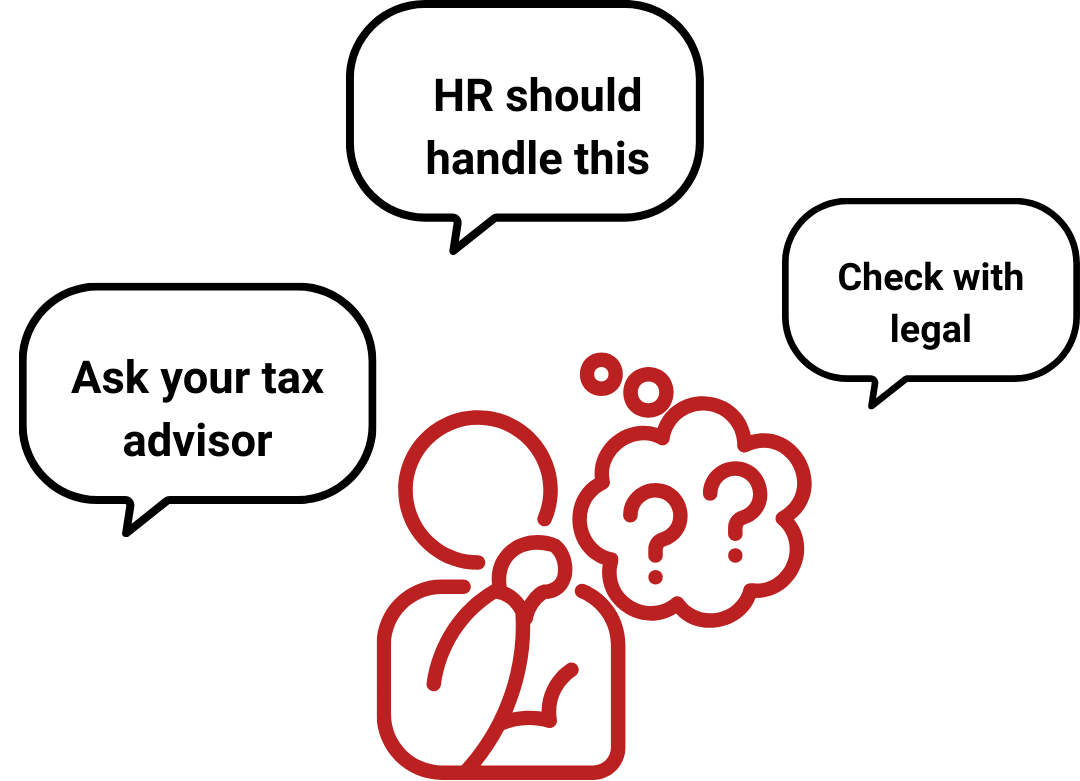
Instead of moving forward, companies spend management time clarifying who does what. Experts note that a lack of unified communication channels in Vietnam can cause “delays, miscommunication, and extra costs”. For example, if a commercial contract needs both legal vetting and tax input, two separate teams must coordinate schedule and data. Any delay in one stage delays the whole project. Over time, these coordination costs accumulate: what seemed like parallel efforts often result in sequential bottlenecks.
Overlapping Costs and Duplicate Work
Working with multiple advisors often leads to double-charging for similar tasks. An accounting firm and a payroll provider may both enter the same financial data or prepare VAT-related calculations, each billing separately for overlapping work. This repetition inflates costs without adding real value.
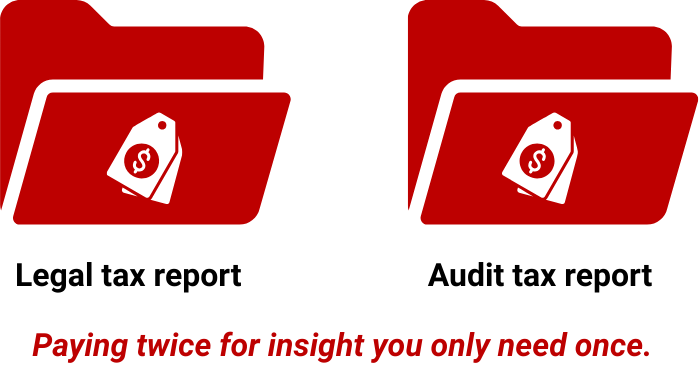
Fragmentation also encourages duplicated analysis. For example, separate legal and audit firms may each prepare their own corporate tax assessments, charging professional fees for work that largely covers the same ground. While each advisor operates within its own scope, the company ends up paying twice for insight it only needs once.
By contrast, an integrated advisory model consolidates these efforts. Tax reporting is handled through a single process, with legal or payroll input provided only where needed. When accounting, tax, and payroll are aligned under one operating framework, duplicated tasks are eliminated, timelines are shorter, and overall advisory costs are lower.
In practical terms, integration does not reduce quality. It reduces waste. By removing overlap, companies free up budget and management attention for activities that actually support growth.
Fragmented Accountability
Perhaps most frustrating is the lack of a single owner for each task. When multiple firms are involved, no one person guarantees success. If a filing is late or a regulation is overlooked, each adviser may blame the others. This finger-pointing creates delays in fixing problems and sows distrust. In contrast, a cohesive business consulting partner takes full responsibility end-to-end. As one consulting group puts it, working with a single team means “No finger-pointing. No confusion. We take complete responsibility for your assignments”. In practice, this clarity is invaluable: rather than hunting down which specialist dropped the ball, the client has one trusted advisor overseeing the process from start to finish.
In summary, while multiple advisors offer deep expertise, the hidden cost is fragmentation. Compliance gaps emerge, communication falters, timelines slip, costs multiply, and accountability fractures. A foreign investor juggling this complexity often pays more – in time and money – than necessary. But as the next sections explain, there is a better way.
Explore InCorp Vietnam’s one-stop business consulting services to manage market entry, compliance, and operations under a single, accountable partner.
Choosing the right one-stop business consulting partner
Not all one-stop consulting providers deliver the same level of integration, so foreign investors should evaluate potential partners carefully. The right choice can significantly reduce risk, cost, and management burden over the life of the business.
First, look for truly comprehensive services. A one-stop partner should cover accounting, tax, payroll and HR, corporate secretarial, licensing, and legal support under one operating framework. If key functions are still outsourced to third parties, coordination gaps are likely to remain.
Local expertise is equally critical. Vietnam’s regulatory environment relies heavily on local interpretation, language, and administrative practice. A capable partner must understand not only the written regulations but also how authorities apply them in practice and be able to work fluently in Vietnamese.
Experience with foreign-invested enterprises is another essential factor. Advisors who regularly support FDIs are more familiar with investment conditions, tax incentives, reporting obligations, and common compliance risks faced by overseas shareholders.
Clear ownership also matters. A reliable one-stop provider assigns a dedicated relationship manager who coordinates all services internally. This ensures clients work with one integrated team rather than managing multiple contacts or loosely connected specialists.
Finally, pricing should be transparent and predictable. Fee structures should clearly define what is included and avoid surprise add-ons. Fixed packages or retainer models are often more effective than paying multiple advisors on separate hourly arrangements.
When chosen carefully, a one-stop business consulting partner can be a game changer for foreign investors. With company setup and ongoing compliance managed under a single framework, businesses reduce hidden costs, avoid coordination failures, and gain a clear line of accountability. The result is fewer compliance gaps, lower cumulative fees, and greater confidence in day-to-day operations.
At InCorp Vietnam, we provide one integrated team to manage accounting, tax, payroll, and compliance, so foreign investors can operate in Vietnam with clarity, control, and confidence.
Mitigating risks with an integrated business consulting approach
To address the risks created by fragmented advisory models, many foreign companies operating in Vietnam choose an integrated, one-stop consulting approach. Instead of managing a patchwork of specialists, they work with a single operating partner that aligns market entry, compliance, and day-to-day operations under one coordinated framework. This shifts the burden of coordination away from the client and ensures that decisions across legal, tax, payroll, and accounting are made with full context.
At InCorp Vietnam, this integrated model is designed to provide exactly that clarity. Our teams combine market-entry advisory, corporate secretarial, accounting, tax, payroll, and compliance expertise within a single engagement. Clients work with one primary point of contact, while specialist teams coordinate internally. This structure removes the back-and-forth between external vendors and eliminates the common scenario where issues are passed from one advisor to another.
The value of integration lies in continuity and alignment. Entity structuring decisions are made with tax and employment implications in mind. Payroll and accounting are set up to support ongoing compliance from day one. Regulatory changes are assessed holistically, rather than in isolation. By managing the full operating lifecycle, we help clients avoid misaligned tax treatments, duplicated advisory work, and compliance gaps that often arise when services are split across providers.
An integrated approach also improves efficiency and accountability. Internal teams spend less time coordinating vendors and more time focusing on growth. Shared resources eliminate overlapping fees for routine tasks. Communication is streamlined through a dedicated relationship manager. Most importantly, accountability is clear. When an issue arises, there is one team responsible for resolving it, not multiple advisors debating scope.
For foreign investors navigating Vietnam’s regulatory environment, integration is not about convenience alone. It is about reducing risk, controlling costs, and building a stable operating foundation that can adapt as the business grows.
Partner with InCorp Vietnam for end-to-end operational support in Vietnam, from company setup to ongoing compliance and growth.
Learn the Right Setup for Business
Expansion in the Vietnam
Frequently Asked Questions
What is a one-stop business consulting partner?
- It is a single firm that manages market entry, compliance, and ongoing operations through an integrated team rather than multiple external advisors.
Is a one-stop model more expensive than hiring separate advisors?
- Not usually. While the upfront fee may appear higher, it often lowers total cost by eliminating duplicated work and coordination overhead.
Why is local expertise critical in Vietnam?
- Vietnam’s regulations require local language filings and practical knowledge of how authorities apply rules, not just written laws.
How do I know if a provider is truly integrated?
- Look for comprehensive in-house services, a single point of contact, and clear accountability for end-to-end outcomes.