Vietnam remains an important destination for manufacturers diversifying their supply chains and expanding production in Asia. Yet deciding to set up a factory in Vietnam is only the first step. Investors must also choose where to operate, what type of factory to use and whether the site can support the business over time.
A location that appears attractive because of its rental price may prove less competitive once freight, recruitment or utility costs are included. This article looks at Vietnam’s main manufacturing regions and the practical questions foreign investors should address before establishing a factory.
Where Are Vietnam’s Main Manufacturing Clusters?
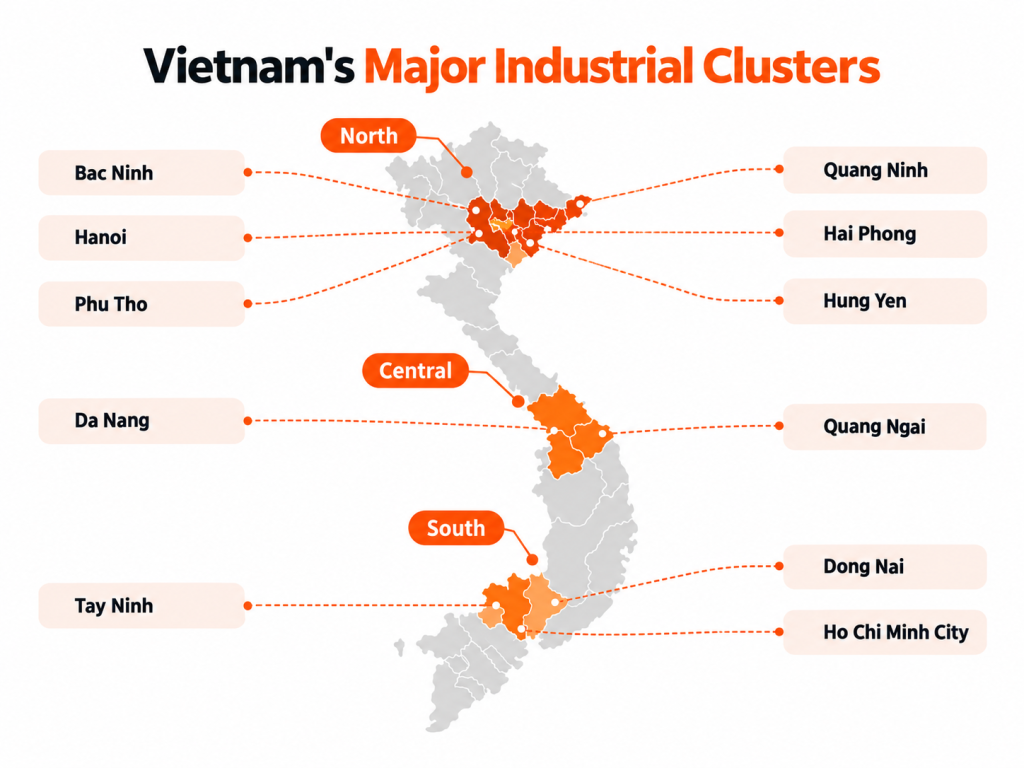
Vietnam’s manufacturing activity is commonly grouped into three broad regions: the North, Central Vietnam and the South. Each has a different industrial base, labor market and logistics network. Investors should use these regional differences to develop a shortlist, then assess individual provinces and industrial parks against their project requirements.
Read more: Guide to Setting Up a Manufacturing Company in Vietnam
Northern Vietnam: Established Supply Chains and Access to China
Northern Vietnam is often a strong starting point for manufacturers that depend on components or equipment moving between Vietnam and China. Industrial hubs around Hanoi, Hai Phong and Bac Ninh have established activity in electronics, mechanical engineering, heavy industry and export manufacturing.
The region offers access to technical talent and developed supplier networks. However, established locations can also bring greater competition for skilled workers and higher site costs. Manufacturers should check whether the benefits of proximity to suppliers and transport routes justify those costs for their particular operation.
Central Vietnam: Emerging Options for Cost-Conscious Investors
Central Vietnam may appeal to manufacturers seeking alternatives to the more established northern and southern hubs. Da Nang and surrounding locations have attracted attention as infrastructure develops and industrial options expand.
The region’s smaller industrial base calls for careful due diligence. Investors should verify whether the required suppliers, specialist employees, utilities and freight connections are available at the scale their project needs. Lower land or labor costs alone will not compensate for a supply chain that cannot reliably support production.
Southern Vietnam: A Broad Industrial and Supplier Base
Ho Chi Minh City and the surrounding southern industrial region support a diverse range of manufacturing activities. For companies that need access to an established supplier ecosystem, a large workforce or customers in the South, the region offers several potential advantages.
Manufacturers should also account for wage pressure and employee turnover in mature industrial areas. The best choice may be an industrial park that provides access to the southern ecosystem while meeting the project’s specific cost and workforce requirements.
Which Factory Model Fits Your Investment Plan?
The choice of factory model affects how quickly a manufacturer can begin operating, how much capital it must commit and how easily it can adapt the site later.
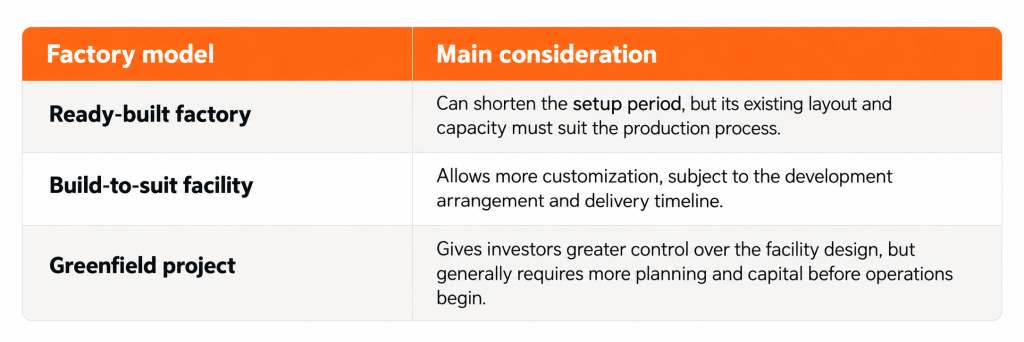
Investors should start with their equipment, production flow, utility requirements and expected growth. A ready-built facility may be suitable for one manufacturer, while another may need a purpose-designed site to accommodate specialized processes or future production lines.
What Does It Really Cost to Operate a Factory in Vietnam?
Comparing industrial parks by rental price alone can give investors an incomplete picture. A sound cost assessment should cover both the initial setup and recurring expenses after production begins.
Workforce and Payroll
Budgeting should extend beyond base salaries. Manufacturers need to consider recruitment, training, expected wage growth and applicable employment contributions. Access to the right workers also matters: a lower-cost location may require more time or expense to hire specialist technicians and engineers.
Need help planning workforce costs for your Vietnam factory? Ascentium Vietnam’s HR & Payroll services can support recruitment planning, payroll administration and employment compliance as your operations grow.
Utilities and Facility Requirements
Electricity, water, wastewater treatment and facility maintenance can have a substantial effect on operating costs. Manufacturers with energy-intensive production or specific treatment needs should check the capacity available at the actual site, as well as the charges and conditions that apply.
Some industries, including electronics, pharmaceuticals and chemicals, may need additional fire safety systems, environmental safeguards or specialized infrastructure. Identifying these requirements during site selection can help prevent costly changes later.
Logistics and Inventory
A lower factory rent may come with longer journeys to suppliers, ports or customers. Investors should calculate freight and warehousing costs alongside delivery times and the amount of inventory needed to keep production running.
For import and export operations, the assessment should also consider customs brokerage, port handling and related documentation costs. The most economical site is not necessarily the one with the lowest lease price; it is the one that works efficiently across the full supply chain.
What Should Investors Check Before Signing an Industrial Park Lease?
Once a shortlist has been prepared, each site needs a closer operational and commercial review. Key questions include:
- Is the permitted site use suitable for the proposed manufacturing activity?
- Can the facility provide sufficient power, water and wastewater treatment capacity?
- What is included in the quoted rent, and which service or utility fees are charged separately?
- Who is responsible for fit-out, repairs and ongoing maintenance?
- How will rent change during the lease term?
- Is nearby space available if production needs to expand?
- What conditions apply to renewal or early termination?
These details can affect the investment long after the initial lease is signed. Investors should confirm them against their production plan and financial model before committing to a site.
How Ascentium Vietnam Can Support Your Manufacturing Investment
Ascentium Vietnam (formerly InCorp Vietnam) supports foreign manufacturers evaluating where and how to establish operations in Vietnam. Our team can assist with location analysis, industrial site assessment, company formation and the corporate services needed to prepare for operations.
If you are comparing manufacturing locations or planning a factory setup, contact our Ascentium Vietnam’s experts for consultation for your manufacturing setup
Conclusion
Vietnam offers a range of manufacturing locations, but no single region or factory model is right for every investor. The strongest decision comes from testing a specific site against production needs, workforce availability, utilities, supply chain costs and plans for expansion.
By assessing these factors before committing capital, manufacturers can choose a location that supports both a successful launch and sustainable operations in Vietnam.
Learn the Right Setup for Business
Expansion in the Vietnam
Frequently Asked Questions
Can I Apply Without a VNeID Account?
- Foreigners without suitable electronic identification can use the permitted in-person or postal route. Confirm the competent police office, declaration and signature-certification requirements before submitting.
Can Someone Apply on My Behalf?
- Yes. The revised law permits representation for both certificate types. Confirm the authorization formalities and accepted submission method for your circumstances, especially when signing documents abroad.
Can I Obtain a Certificate After Leaving Vietnam?
- Former foreign residents are included in the right to request their own certificate. Check the central authority route and whether an authorized representative can complete the process for you.
Is the Certificate Always Valid for Six Months?
- Do not apply one universal validity period to every use. For a separately supplied work-permit criminal-record document, the issue-date limit is 6 months at filing. Overseas immigration and other recipients may impose their own recency conditions.